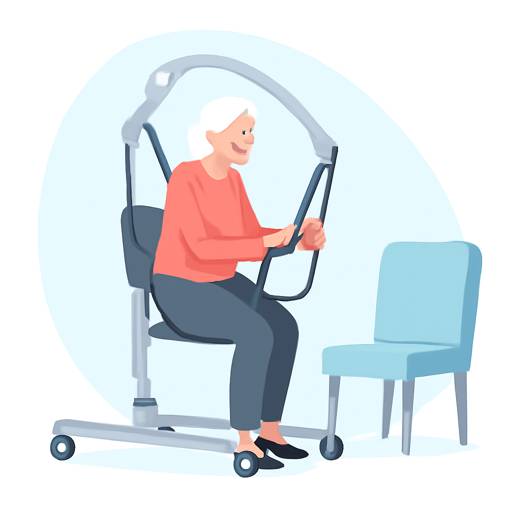
Your Guide to Safe Mobility: Understanding When and Why to Choose a Sit-to-Stand Lift
When mobility becomes a challenge, the simple act of rising from a seated position can transform into a daunting, and sometimes dangerous, task. For individuals who retain some strength in their legs and upper body but lack the stability or endurance to stand independently, a specific category of equipment provides a vital bridge between total dependence and full autonomy. This equipment, a sit to stand lift for sale, is engineered not just to move a person, but to engage them in the process of standing. Unlike a full-body sling lift that transports a passive patient, a sit-to-stand device works with the user’s existing weight-bearing capability. This active participation is crucial for maintaining muscle tone, circulation, and a sense of dignity. The device employs a padded knee pad, a stable base, and a hand-held bar or sling that supports the back. As the lift engages, it smoothly moves the user into a standing position, allowing for a lateral transfer to a wheelchair, toilet, or bed. The demand for these devices in home care and long-term facilities continues to rise, driven by a focus on rehabilitation and reducing the physical toll on caregivers.
The therapy principles behind a sit-to-stand lift are rooted in the concept of functional mobility. By requiring the user to bear weight through their legs, the lift helps to prevent deconditioning and promotes better bone density. For a caregiver, the lift eliminates the need for awkward, forceful lifting that often leads to chronic back pain and injury. It is not a one-size-fits-all solution, but rather a precise tool for a specific patient profile. The ideal candidate is cooperative, can follow simple commands, and can bear at least 50% of their own body weight. Finding the right model involves assessing the user’s height, weight, and the specific environments where the lift will be used. Whether for a patient recovering from hip surgery or an individual living with progressive muscle weakness, investing in this technology represents a commitment to safer, more dignified care.
Mechanics and Safety: What Makes a Sit-to-Stand Lift Effective?
The operational success of a sit-to-stand lift hinges on its mechanical design and the safety protocols built into its structure. At the core of the device is the hydraulic or electric actuator. Manual models use a hand crank or pump, offering a lower cost but requiring more physical effort from the caregiver. Electric models, often preferred in care facilities, use a rechargeable battery pack that powers a smooth, consistent lifting motion. The base of the lift is another critical component. It is designed to slide under a bed, chair, or wheelchair with a wide, stable footprint that prevents tipping. The base legs are typically adjustable, widening for maximum stability during the lift and narrowing to navigate through doorways. The knee pad, positioned against the user’s shins, is contoured for comfort and prevents the user from sliding forward during the standing motion.
Safety features extend beyond structural stability. Most modern lifts include an emergency stop button and a manual override system that allows the lift to be lowered in the event of a power failure. The safety sling or vest is a critical link in the system. It wraps around the user’s back and clips to the lift’s boom, providing chest support without restricting breathing. Caregivers must be trained to ensure the sling is correctly positioned, as improper placement can lead to discomfort or instability. The weight capacity of a sit-to-stand lift is a non-negotiable safety factor. Units range from supporting 350 to 700 pounds, and exceeding the maximum load compromises the device’s integrity. Regular maintenance checks on the casters, which must support both the weight of the lift and the user, are essential. High-quality, dual-locking casters provide a secure grip on the floor during the transfer and allow for smooth rolling once the user is elevated. The entire process reduces the sheer force and friction that can cause skin tears, making the lift a safer alternative to manual transfers for individuals with fragile skin.
Another layer of effectiveness is the ergonomic design for the caregiver. The handles used to steer the lift are positioned to keep the caregiver’s spine in a neutral, safe position. The sling attachment points are at a height that prevents the caregiver from reaching overhead. This dual focus—protecting the patient and the caregiver—is what makes the mechanical design so valuable. A poorly designed lift might fail to engage the patient's strength or put the caregiver at risk. High-end models also feature digital weight scales integrated into the lift frame, allowing for accurate weighing of patients during transfers, which is a valuable function in medical settings. The integration of these features means that a patient can be safely and comfortably transferred for years, making the selection of a quality unit a long-term investment in health and safety.
Evaluating Key Features Before Looking at a Sit to Stand Lift for Sale
Before committing to a purchase, a thorough evaluation of the specific features that match the user’s environment and physical condition is required. The first variable to consider is the weight capacity and the width of the base. A bariatric-grade lift will have a wider base and sturdier construction to accommodate heavier loads safely. Conversely, a standard lift with a narrow base might be more maneuverable in a small bathroom. The lift range is also critical. The device must be capable of lowering low enough to fit under a standard toilet or low-profile bed and rising high enough to clear the armrest of a wheelchair. Checking the manufacturer's specifications for minimum and maximum heights is a practical step often overlooked. The type of sling or harness is equally important. Quick-release slings made of breathable, washable material are easier to maintain and more comfortable for long-term use. Some models offer a one-piece vest, while others use a belt-and-strap system; comfort and ease of donning and doffing should guide this choice.
Battery life and power systems are a practical concern for daily use. A full day of heavy use can drain a battery, so looking for extended-life batteries or having a spare on hand is wise for facilities. For home use, a battery that lasts for a full day of transfers is usually sufficient. The caster quality cannot be stressed enough. Hard plastic casters are fine on smooth, flat floors but can be noisy and rough on tile or concrete. Soft, non-marking rubber casters provide better traction, reduce noise, and protect flooring. The ability to lock the casters prevents any drift during the transfer, which is a crucial safety element. Another feature to investigate is the type of lifting mechanism. Hydraulic lifts are often quieter and more affordable, while electric lifts offer more consistent speed and require less manual effort. For a home setting with a single caregiver, an electric lift is often the best choice to reduce physical strain over time. When you are actively shopping, you will find that a high-quality sit to stand lift for sale will list these specifications transparently, allowing for a direct comparison between models.
Finally, consider the accessories and warranty. Does the lift come with a sling, or is it an extra cost? Are there multiple sling sizes available? The storage footprint is another practical factor; a heavy, non-folding lift requires dedicated space, while portable models can be broken down for travel or storage in a closet. The warranty period reflects the manufacturer’s confidence in their product. A standard warranty of three years on the frame and one year on the motor and electronics is considered good. Investing in a model with a more extended warranty can save significant repair costs down the line. Evaluating all these aspects ensures that the lift you choose is not just a piece of equipment, but a perfect fit for the daily reality of the user and their caregiver.
Real-World Application: Case Studies in Effective Use
To understand the true impact of a sit-to-stand lift, it is helpful to examine its application in different real-world scenarios. In a case study from a suburban home care setting, a 78-year-old man recovering from a total knee replacement was unable to use the bathroom independently due to pain and instability. His wife, a petite woman in her 70s, was unable to support his weight safely. Initially, they relied on a standard walker and manual assistance, which led to several near-falls and significant anxiety for both parties. Upon introduction of a sit-to-stand lift, the transfer became a two-step process: the man would slide to the edge of the bed, and his wife would position the lift, secure the sling, and activate the lift. Within two weeks, his confidence grew. He began to engage his recovering leg more, and the device allowed him to stand safely without fear of falling. The wife reported a dramatic decrease in her own back pain and fatigue. The key takeaway was the device’s role in preserving the couple’s ability to live at home, delaying the need for assisted living.
Another example comes from a skilled nursing facility that introduced a program to reduce the number of workers' compensation claims. The facility observed that the highest incidence of caregiver injury occurred during manual bed-to-chair transfers for patients with partial weight-bearing ability. The facility implemented a protocol mandating the use of sit-to-stand lifts for all patients who met the criteria (able to bear weight, cooperative, stable blood pressure). Over a six-month period, the facility documented a 40% reduction in staff injuries related to patient handling. Furthermore, patient satisfaction scores improved, as residents felt they were being handled more gently and were actively participating in their mobility. The lift was also used as a rehabilitation tool; physical therapists noted that patients using the lift for transfers regained standing strength faster than those who were passively transferred with a full-body sling, because the lift required active muscle engagement. This dual benefit—reducing staff risk while improving patient outcomes—validated the facility’s investment in the equipment.
A third case study involves a 45-year-old woman with advanced multiple sclerosis (MS). While she had upper body strength, her leg muscles frequently gave out, particularly in the afternoon, leading to sudden drops. Traditional transfer methods were risky and frightening. The sit-to-stand lift provided a stable framework. She was trained to use the lift independently with a remote control, allowing her to stand up from her power wheelchair without waiting for an aide. This restored a significant degree of autonomy. The lift was not just a safety device; it was an independence tool. The case highlights that the lift is not only for post-surgery recovery but also for managing chronic, progressive conditions. In each of these scenarios, the lift performed its core function: it created a controlled, repeatable, and safe mechanism for standing, which is the foundation of so many daily activities, from cooking to personal hygiene. The common thread is the reduction of fear and physical strain, transforming a hazardous activity into a manageable procedure.